Showing posts with label Dew. Show all posts

Wednesday, August 22, 2007

Everyman by Philip Roth: Dewey's review

Cross-posted at my blog.

Everyman is the first Roth book I've read, and it definitely makes me want to read more of his work. But it was terrifying. It begins with the funeral of the main character, then flashes back through his life, ending with his death. I'm not uncomfortable with the idea of death -- I've worked in a funeral home. But I am deeply uncomfortable with the idea of the increased health problems that often become the focus of life as one ages. The unnamed main character, like Roth himself, finds himself suffering repeated hospitalizations. I found the detailed descriptions of the illnesses of this man in his 70s frightening and disturbing. His death almost came as a relief for me, as I imagine it does for many chronically ill people. By the way, mentioning his death isn't a spoiler; the book opens with his funeral.

The main character's life is fairly empty due to a lot of burned bridges with his family members and the loss of connection with his friends once he retires. He's been married (and divorced) three times, and his two children from his first marriage, angry their entire lives about the divorce, aren't on speaking terms with him. He does have a close, rewarding relationship with his daughter from his second marriage, but he's very aware that being the only person she's close to may be somewhat a burden for her. He has very little or no contact with his former wives; his parents are dead; and his brother, though probably the person he's cared most about in his life, has a very active life rich with family on the other side of the U.S., and the main character feels a bit disconnected from him and his children. He's a lonely man, as many older people seem to be.

He doesn't seem to have much to do during the day; he keeps active, exercising twice a day, but that's about all he has planned for each day. He used to paint and even give painting classes to other retirees, but gave up on it. He doesn't seem to read. Unlike most of the elderly neighbors I've had, he doesn't spend all day watching TV.

I guess I've always expected to be an older person much like Wallace in Wallace and Gromit. I expect to have a companion, though preferably a human (my husband, I hope!) instead of a dog. I expect to have passionate interests, such as Wallace's mechanical contraptions, his gardening, and his self-employment. I've assumed my interests as an older person would be pretty much the same interests I have now. But in Everyman, the main character seems to lose interest in what he used to love, even in what he had spent his younger life assuming he'd pursue during retirement, his painting. I'm not sure that's true for everyone; I have friends and acquaintances the age of the main character who still keep active and busy.

I marked a few favorite passages:

"There's no remaking reality," she told him. "Just take it as it comes. Hold your ground and take it as it comes."


I both love and loathe this passage. I love it because it's the main character's daughter, at his funeral, repeating a maxim she'd heard her father use many times in the past. I loathe it because it's so resigned, so defeatist, such an assumption that life will always be a trial.

It was inexplicable to him -- the excitement they could seriously persist in deriving from his denunciation. He had done what he did the way that he did it as they did what they did the way they did it. Was their steadfast posture of unforgivingness any more forgivable? Or any less harmful in its effect?


This is the main character thinking about his broken relationships with his sons. He goes on to think that as he had never abused them or even been strict, they shouldn't hold a life-long grudge against him because he could no longer tolerate marriage to their mother. I like the spirit of letting go of grudges here. I agree with the main character that one should save long-term unforgivingness for more heinous transgressions such as abuse.

Religion was a lie that he had recognized early in life, and he found all religions offensive, considered their superstitious folderol meaningless, childish, couldn't stand the complete unadultness -- the baby talk and the righteousness and the sheep, the avid believers.


This passage is part of the section that Roth chose to read aloud in an NPR interview with him, and I appreciated being able to hear him expand upon his feelings about religion. Although I like to consider myself more tolerant of others' beliefs than the main character of Everyman is, I do share his puzzlement about it. Roth's interviewer seems to find herself puzzled by Roth's descriptions of religion as "irrational" and "delusioned," since she brings the topic back to religion a couple times in the interview, seemingly trying to get him to admit that he does have some sort of religious beliefs, or at least that he does understand why others do. He remains polite but firm in his stance.

I think this firmness is one of the things I found most interesting in the novel. I kept expecting the main character to develop religious convictions as I've seen some of the older people in my family do after a lifetime of indifference to it. I've always assumed that this is driven by a fear of death, of wanting to reconcile with whatever higher power one might meet after death. But the main character (and Roth himself, exactly the same age as his character) remain secular as mortality approaches.

At the same site where you can hear Roth's NPR interview, you can also read the first chapter.

Reading a Guardian interview, I came to the conclusion that Roth would despise this post, and probably book blogging in general. He says:

I would be wonderful with a 100-year moratorium on literature talk, if you shut down all literature departments, close the book reviews, ban the critics. The readers should be alone with the books, and if anyone dared to say anything about them, they would be shot or imprisoned right on the spot. Yes, shot. A 100-year moratorium on insufferable literary talk. You should let people fight with the books on their own and rediscover what they are and what they are not. Anything other than this talk. Fairytale talk. As soon as you generalise, you are in a completely different universe than that of literature, and there's no bridge between the two.

Monday, August 6, 2007

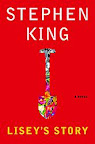
Lisey's Story: Dewey's review

Cross-posted at my blog.

Title, author, and date of book? Lisey's Story, Stephen King, 2006

Genre: fiction, nonfiction, memoir, history, etc.? Fiction. King generally writes horror, and there are aspects of that in this book, as well as thriller and fantasy.

What made you want to read it? Did it live up to your expectations? I generally read everything new that King publishes. No, it didn't really live up to my expectations. Since this was chosen as a New York Times Notable Book, I expected it to be one of the best King novels. It's about average on my personal spectrum of King novels.

Summarize the book without giving away the ending. The main character, Lisey, is the widow of a famous writer. She's grieving as well as trying to process some of what she knows about her husband and his past, and trying to deal with an ill sister, and trying to deal with a deranged stalker.

What did you think of the main character? I thought she was very strong; she's one those quiet women you may not notice, but if you get to know them, you realize they're intelligent and strong as hell.

Which character could you relate to best, and why? I didn't relate to any of the characters. The main character, Lisey, has 20 million dollars, a dead husband and several sisters. She's the youngest in her family and she's never had a career. The only thing I really have in common with her is that I know what it's like to travel so much that it's not even fun any more. Her sister, Amanda, is catatonic through most of the novel, so it's hard to identify with her. I certainly don't identify with a male Pulitzer/NBA winning novelist. And most of all, I don't identify with a deranged, violent stalker.

Were there any other especially interesting characters? The dead writer has a father and brother that we meet through flashbacks to his childhood. They were some of the most interesting characters, for me.

Did you think the characters and their problems were believable? Well, no. But I don't think I'm meant to. There is another world that the characters visit in a vaguely Narnia-like way. Those who can visit that world have amazing healing powers.

From whose point of view is the story told? Lisey's.

Was location important to the story? There are a lot of references to King's fictional places in Maine. For details on those connections, click here.

Was the time period important to the story? It seemed more like current technology interfered with the story. For example, in order to make some of the isolation Lisey experiences more plausible, she had to be completely clueless about her own cell phone.

Was the story told chronologically? Was there foreshadowing? No, it wasn't told chronologically. There were a lot of flashbacks, both to the time that Scott (Lisey's husband) was alive and to Scott's and Lisey's childhoods. Yes, there was some foreshadowing.

Did you think the story was funny, sad, touching, disturbing, moving? It wasn't as sad and disturbing as it was probably meant to be. I think a stronger sense of grief was required from Lisey, whereas there was really more a problem-solving air about her.

What did you like most about the book? As always, I enjoyed King's wordplay.

What did you like least? The disgusting scenes featuring the violent stalker. But I think they were meant to be that disgusting.

Share a quote from the book. A "long boy" is a sort of monster from the alternate world the characters travel to.


Her own fear is so great it's incapacitating, and any sense of exhilaration at having him back is gone. Has he lived with this all his life? If so, how has he lived with it? But even now, in the extremity of her terror, she supposes she knows. Two things have tied him to the earth and saved him from the long boy. His writing is one. The other has a waist he an put his arms around and an ear into which he can whisper.


Share a favorite scene from the book. I have two favorite scenes.

In the first, Lisey and Scott are spending a winter in Germany. King did a wonderful job evoking the sense of despair and desperate homesickness the two experienced. I also like how this scene captured the way in which the mental anguish of one person in a couple can be contagious for the other.

I also enjoyed the flashbacks to Scott's childhood. King has a gift for characterization, particularly with child characters. The events of Scott's childhood are so horrific, but so real in spite of their basic unreality, that I had to wonder if King himself had lived with a mentally ill parent.

What about the ending? To be honest, this book really bogged down in the last 1/3 or so. I got to the point where I just wanted to finish. The end contains some writing of Scott's that Lisey found, which gives her a sort of closure. I'm not sure I believe there is such a thing as closure on losing someone you have lived with and loved for 25 years. But Lisey comes as close as she could probably hope for.

What do you think will be your lasting impression of this book? I think my lasting impression will be "one of the Stephen King books with a female main character." Not one that stands out.

Thanks to Bonnie for her version of the book review questionnaire.

Here's an interview with King about this book, though they don't get to discussing this book in particular until halfway through the four minutes. The playful humor you find in King's books is apparent also in this interivew.

Wednesday, June 27, 2007

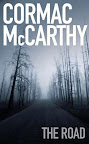
The Road -- Dewey's review

Cross-posted at my blog.

This is my first book for this challenge, and I feel awkward giving an at least partially negative review to such a widely-loved (and critically acclaimed) book my first time posting. Don't hold it against me, please! :)


If I were Cormac McCarthy's editor, here is what I would have said to him: I realize that your stylistic choices in this book are meant to reflect a world so barren that it doesn't have the luxury of such frills as apostrophes, commas and complete sentences. But your post-apocalyptic setting is stark enough, your characters are traumatized enough, your spare prose is Hemingwayesque enough that you don't need to resort to twee gimmicks to get your point across. Stop that.

Well. I feel better now! On to the review.

It took me a long time to warm up to The Road. I could not become immersed in the story because I was too busy working out why some contractions deserve the dignity of apostrophes and some don't. I mean dont. Because it's only the negatives who are forced to walk around naked without their punctuation. Even my favorite sentence of the book, a thought the man has while watching his sleeping son, was ruined for me by McCarthy's aversion to commas: If he is not the word of God God never spoke. God God sounds like something God's mom called him when he was a toddler. When I'm being moved by a father's love for his son and a pretty metaphor, I don't want to be distracted by the idea of God as a toddler with a mom, you know?

If you stripped this novel of all the tedious ash ash ash, walk walk walk, forage forage forage, rain rain rain details, it would be a good short story.

But I did say I eventually warmed up to the book. At about the middle of the novel, the man and the boy find a hatch in the ground, fully equipped and left behind by someone with forethought, but without the luck to have survived long enough to use it. After the man had rested and eaten well, suddenly he thought in paragraphs! He had complex ideas! Now this was some damn good writing, but I stopped and had a WTF? moment while I tried to figure out why the style had changed so drastically.

And then I got it. The man and the boy, on the road, are far too exhausted and hungry to say more than "Okay" and "I don't know." Their thoughts are simple despite their obvious intelligence because their more basic needs are unmet. Their world is nothing but ash ash ash, walk walk walk, forage forage forage, rain rain rain. When their basic needs for cleanliness and sleep and food are met, they become more than just nomadic animals with minimal communication skills. Brilliant! I decided I loved this particular technique.

Compare:

Is it cold?
Yes, it's freezing.
Do you want to go in?
I don't know.
Sure you do.
Is it okay?
Come on.


He turned and looked at the boy. Maybe he understood for the first time that to the boy he was himself an alien. A being from a planet that no longer existed. The tales of which were suspect. He could not construct for the child's pleasure the world he'd lost without constructing the loss as well and he thought perhaps the child had known this better than he. He tried to remember the dream but he could not. All that was left was the feeling of it. He thought perhaps they'd come to warm him. Of what? That he could not enkindle in the heart of the child what was ashes in his own. Even now some part of him wished they'd never found this refuge. Some part of him always wished it to be over.


Still spare, still treating commas like McCarthy is a black coffee fan and commas are the whipped cream on some frou-frou Starbucks beverage -- and what more can you expect from a writer who calls semi-colons "idiocy?" But the man is desperate, even suicidal, so I can accept spareness. At least it no longer reads like first grade primer.

Through the entire first half of the novel, the starkness was distracting and irritating, and I found myself reading just to finish the book. After the respite in the underground shelter, when the point of the style clicked for me, I was more ready to accept devices like the tediously simplistic dialogue, though I still felt irritated by the crazy punctuation.

In spite of all this distraction from the actual story, I found myself frequently thinking about the characters when I was away from the book. I absolutely love the relationship between the father and the son. I love the son's intrinsic ethics, which the father doesn't want to squelch, and in another time wouldn't have to, but which he fears are dangerous on the road. And I love that McCarthy got so many of the emotions of parenting just right.

There were three big questions hanging over my head throughout the book.

1. How old is this boy?
2. What the hell happened to the world to make it this way?
3. How did these two survive when most people are dead?

These questions went without any definitive answers, but I found myself absorbed in watching for clues of the boy's age. I settled on seven. He can read in spite of a life without books, but he's still very vulnerably young. I have no idea why I fixated on figuring out the boy's age. He was my favorite character (not that there was much competition) and I think I was given so little information about him that I needed to ferret out more to make him feel more real.

There were more clues to the answer to my second question. The setting seemed to be the southeastern U.S. suffering from the effects of nuclear winter. They couldn't see the sun, it was cold, and there was ash everywhere. So I'm assuming there was a nuclear war, though it could have been some enormous natural disaster, maybe caused by global warming.

Not answering the third question seemed to me a flaw in the narrative. I really want to know what allowed them to survive. Had they found safe shelter? Were they just lucky? It seems essential, because if they survived due to their own cunning, that allows the reader to accept that they could keep surviving on the road.

Before even starting the book, I ran into a spoiler that revealed to me just how it ends. Knowing that ahead of time, combined with the unwavering hopelessness throughout the novel, prepared me for the unbearably sad ending. In fact, the book was so depressing in general that I found myself despairing over the pointlessness of life. Fortunately, I prescribed myself some chocolate chocolate chip Haagen-Dasz and an episode of Family Guy, and I was cured and ready to face life again.

I want to avoid spoilers, but I have to say that in I was even more disappointed by the deus ex machina ending after the sad part than I was by the stylistic oddness. I haven't seen anyone else mention this, either in blog reviews or print reviews, and I'm not sure if that's in an attempt to avoid spoilers or if people just didn't mind it.


Here
is an amusing account of Oprah's interview with McCarthy.

Wednesday, May 23, 2007

Dewey's list

Hi Everyone!

I know I'm joining really late, but so many of these books are already in my TBR pile or on my bookmooch wishlist, so I decided my list would just be everything I'm already planning to read.

1. After This by Alice McDermott
2. Digging to America by Anne Tyler
3. Everyman by Phillip Roth
4. Lisey's Story by Stephen King
5. Only Revolutions by Mark Z. Danielewski
6. The Possibility of an Island by Michel Houellebecq
7. Special Topics in Calamity Physics by Marisha Pessl
8. Suite Francaise by Irene Nemirovsky
9. Absurdistan by Gary Shteyngart
10. Against the Day by Thomas Pynchon
11. The Emperor's Children by Claire Messud
12. The Road by Cormac Mccarthy

My blog is The Hidden Side of a Leaf.