Wednesday, June 27, 2007

The Road -- Dewey's review

Cross-posted at my blog.

This is my first book for this challenge, and I feel awkward giving an at least partially negative review to such a widely-loved (and critically acclaimed) book my first time posting. Don't hold it against me, please! :)
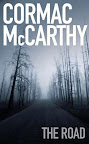


If I were Cormac McCarthy's editor, here is what I would have said to him: I realize that your stylistic choices in this book are meant to reflect a world so barren that it doesn't have the luxury of such frills as apostrophes, commas and complete sentences. But your post-apocalyptic setting is stark enough, your characters are traumatized enough, your spare prose is Hemingwayesque enough that you don't need to resort to twee gimmicks to get your point across. Stop that.

Well. I feel better now! On to the review.

It took me a long time to warm up to The Road. I could not become immersed in the story because I was too busy working out why some contractions deserve the dignity of apostrophes and some don't. I mean dont. Because it's only the negatives who are forced to walk around naked without their punctuation. Even my favorite sentence of the book, a thought the man has while watching his sleeping son, was ruined for me by McCarthy's aversion to commas: If he is not the word of God God never spoke. God God sounds like something God's mom called him when he was a toddler. When I'm being moved by a father's love for his son and a pretty metaphor, I don't want to be distracted by the idea of God as a toddler with a mom, you know?

If you stripped this novel of all the tedious ash ash ash, walk walk walk, forage forage forage, rain rain rain details, it would be a good short story.

But I did say I eventually warmed up to the book. At about the middle of the novel, the man and the boy find a hatch in the ground, fully equipped and left behind by someone with forethought, but without the luck to have survived long enough to use it. After the man had rested and eaten well, suddenly he thought in paragraphs! He had complex ideas! Now this was some damn good writing, but I stopped and had a WTF? moment while I tried to figure out why the style had changed so drastically.

And then I got it. The man and the boy, on the road, are far too exhausted and hungry to say more than "Okay" and "I don't know." Their thoughts are simple despite their obvious intelligence because their more basic needs are unmet. Their world is nothing but ash ash ash, walk walk walk, forage forage forage, rain rain rain. When their basic needs for cleanliness and sleep and food are met, they become more than just nomadic animals with minimal communication skills. Brilliant! I decided I loved this particular technique.

Compare:

Is it cold?
Yes, it's freezing.
Do you want to go in?
I don't know.
Sure you do.
Is it okay?
Come on.


He turned and looked at the boy. Maybe he understood for the first time that to the boy he was himself an alien. A being from a planet that no longer existed. The tales of which were suspect. He could not construct for the child's pleasure the world he'd lost without constructing the loss as well and he thought perhaps the child had known this better than he. He tried to remember the dream but he could not. All that was left was the feeling of it. He thought perhaps they'd come to warm him. Of what? That he could not enkindle in the heart of the child what was ashes in his own. Even now some part of him wished they'd never found this refuge. Some part of him always wished it to be over.


Still spare, still treating commas like McCarthy is a black coffee fan and commas are the whipped cream on some frou-frou Starbucks beverage -- and what more can you expect from a writer who calls semi-colons "idiocy?" But the man is desperate, even suicidal, so I can accept spareness. At least it no longer reads like first grade primer.

Through the entire first half of the novel, the starkness was distracting and irritating, and I found myself reading just to finish the book. After the respite in the underground shelter, when the point of the style clicked for me, I was more ready to accept devices like the tediously simplistic dialogue, though I still felt irritated by the crazy punctuation.

In spite of all this distraction from the actual story, I found myself frequently thinking about the characters when I was away from the book. I absolutely love the relationship between the father and the son. I love the son's intrinsic ethics, which the father doesn't want to squelch, and in another time wouldn't have to, but which he fears are dangerous on the road. And I love that McCarthy got so many of the emotions of parenting just right.

There were three big questions hanging over my head throughout the book.

1. How old is this boy?
2. What the hell happened to the world to make it this way?
3. How did these two survive when most people are dead?

These questions went without any definitive answers, but I found myself absorbed in watching for clues of the boy's age. I settled on seven. He can read in spite of a life without books, but he's still very vulnerably young. I have no idea why I fixated on figuring out the boy's age. He was my favorite character (not that there was much competition) and I think I was given so little information about him that I needed to ferret out more to make him feel more real.

There were more clues to the answer to my second question. The setting seemed to be the southeastern U.S. suffering from the effects of nuclear winter. They couldn't see the sun, it was cold, and there was ash everywhere. So I'm assuming there was a nuclear war, though it could have been some enormous natural disaster, maybe caused by global warming.

Not answering the third question seemed to me a flaw in the narrative. I really want to know what allowed them to survive. Had they found safe shelter? Were they just lucky? It seems essential, because if they survived due to their own cunning, that allows the reader to accept that they could keep surviving on the road.

Before even starting the book, I ran into a spoiler that revealed to me just how it ends. Knowing that ahead of time, combined with the unwavering hopelessness throughout the novel, prepared me for the unbearably sad ending. In fact, the book was so depressing in general that I found myself despairing over the pointlessness of life. Fortunately, I prescribed myself some chocolate chocolate chip Haagen-Dasz and an episode of Family Guy, and I was cured and ready to face life again.

I want to avoid spoilers, but I have to say that in I was even more disappointed by the deus ex machina ending after the sad part than I was by the stylistic oddness. I haven't seen anyone else mention this, either in blog reviews or print reviews, and I'm not sure if that's in an attempt to avoid spoilers or if people just didn't mind it.


Here
is an amusing account of Oprah's interview with McCarthy.

Saturday, June 23, 2007

Beasts of No Nation by Uzodinma Iweala (reviewed by Literary Feline)

Beasts of No Nation by Uzodinma Iweala
Harper Perennial; 2005
Fiction; 142 pgs

Completed: 06/22/2007
Rating: 5 Stars

First Sentence: It is starting like this.

Reason for Reading: After reading Wendy's (Caribousmom) review of Beasts of No Nation, I was instantly intrigued. This is my fourth selection for the New York Times Notable Book Challenge.

Comments: Uzodinma Iweala first came upon the idea of writing a story about a child soldier after seeing an article in Newsweek. He wanted to get inside the mind of a child soldier and understand what the child goes through. Eventually, after careful research and drawing from his own background, Beasts of No Nation was created.

This novel may seem small in size, however, its content is quite powerful. Beasts of No Nation is the story of a young boy in western Africa whose mother and sister have fled from their village with the war’s approach and who witnesses his own father’s murder. Agu is discovered hiding by a young boy soldier and soon finds himself fighting among the guerrilla fighters in a civil war. He is awed by the commandant’s posture and strength. The commandant can be gentle and kind, ruthless and brutal. Throughout his training and the fighting, Agu remembers his past, his relatively simple life. He loved school and books, he liked playing with his best friend, and dreamt of being an engineer or a doctor someday. His new life was vicious and hard.

Uzodinma Iweala captures the voice of his young narrator, creating a story that is both raw and authentic. The child’s fear and anguish can be felt on every page. I had no difficulty being pulled into the rhythm of the narrative and dialogue and it turned into a surprisingly fast book to read even with the unique nuances in the writing style. However, the subject matter itself was quite disturbing in parts; the experiences Agu had to live through are the kind no human being, much less a child should have to experience.

Favorite Part: The author did a wonderful job at giving his character Agu a voice. Several times throughout the book I wanted nothing more than to wrap my arms around Agu and save him from the hard life he had to live. I was grateful he and Strika had each other. I think their friendship got them both through the most difficult moments.

I also liked the way the author weaved myth and fable into the novel, specifically the story about the leopard and the ox and then the story of the greedy cloth seller. Such tales offered an insight into the events taking place in Agu’s life, part of which he may or may not have fully understood.

Note about the Author: Here is an interview with the author.

Miscellaneous: I read an article earlier in the week about three Sierra Leonean military leaders being convicted of a variety of crimes, including conscripting child soldiers. This could have a major impact on future cases involving similar charges, something that is long overdue.

(review originally posted at Musings of a Bookish Kitty).

Friday, June 22, 2007

Administrative question about the header

On a duller, more procedural note that I meant to bring up a long time ago: Is anyone else having trouble with the blog's beautiful header? On my computer, perhaps because it is a Mac or because I use Firefox, the photograph is having two effects: it now takes a very long time to load the blog, and the text in the header now runs off the screen. Is it just my computer? If so, does anyone know what I can do to fix it? If not, is there any way to adjust the size of the picture to fix these two problems? I love the picture and would not like to return to the olden days of a purely textual header.

Ariel/Pour of Tor's review of "Beasts of No Nation"

** Cross-posted at http://sycoraxpine.blogspot.com/ **

In the opening pages of Uzodinma Iweala's first novel (adapted from his undergraduate creative writing thesis, which had no less illustrious an adviser than Jamaica Kincaid) young Agu is snatched from his village - situated in an intentionally unspecific African country - and from his family by a rebel militia he knows would just as happily kill him as conscript him. What unfolds over the next 140 pages is the dense and excruciating tale of a child soldier - that paradox of innocence and immorality that seems so alien to the very concept of childhood, but is the experience of so many around the world right now. Agu's new family, led by the charismatic and despotic Commandant, is held together by bonds of fear, born of the certainty of death for the soldier who shows anything but the most eager obedience, the most frenzied hunger for flesh and blood. This death grip of a familial bond seems claustrophobically tight until it is suddenly - and with nightmarish, vertiginous ease - released.

But how can a child like Agu define himself in the aftermath of this sort of belonging? How do you return to any semblance of youth in the absence of the familial support that the war destroyed and then coopted?

This is a very, very difficult novel to read, and despite its short length, it took me several months and a great deal of willpower to finish it. Nonetheless, it is a remarkable feat of craftsmanship for an author at the beginning of his career. This is, after all, a prolonged and attentive exercise in character and voice. The novel is told entirely in Agu's idiosyncratic and trauma-shattered words, filled with exclamations, elisions, repetitions and unexpected ventriloquisms. We are constantly aware of Agu's childlike but detailed (all part of the central paradox of trauma) impersonations of other voices. This is why it is significant that Agu's only friend in the militia is the silent Strika, whose withholding of speech is both a mark of protest in world virtually without free will and a sign of sincerity and immediacy.

Beasts of No Nation is a book so profoundly oral that it requires absolute concentration, sometimes even in a quiet room, alone, reading aloud. Most often noted by critics among Iweala's many carefully wrought stylistic experiments is his use of an insistent, unsettling present tense. Consider this remarkable passage in which Agu reflects on the violence of coming of age rituals before the war, and the present tense blurs the lines between memory, possibility, actuality, and the current:
By the river, tied to one palm tree by its horn and its leg an ox was always waiting and stomping and making long low noise that are making you to sadding very much in your heart. The whole village was watching as all the dancer is dancing in the shallow river until the whole water is shining with small small wave. Then the top boy is going to the village chief and kneeling before him while the other leopard and ox dancer are dancing around and around him. The chief is giving him real machete and saying something into his ear until the boy is going and chopping one blow into the neck of the ox. Blood is flying all over his body and he is wiping it from his mask with his hand. Then he is putting his hand where he is cutting and collecting the blood to be rubbing on his body. When he is finishing, all the other is doing the same until everyone is covering in so much blood. They are spinning and spinning in their leopard mask or ox mask until KPWOM! the drum is sounding.

Everybody is knowing that to be killing masquerade you are removing its mask.

All of the dancer is removing their mask.

All of the spirit are dying and now all the boy is becoming men.

I am opening my eye and seeing that I am still in the war, and I am thinking, if war is not coming, then I would be man by now. (56)

The immediacy of Iweala's language takes us dizzyingly into Agu's head, and it is difficult to inhabit someone consciousnous with this level of intimacy. But these same qualities also make it impossible to distance yourself from the events of the novel, or to romantize them, as so many foreign treatments of African narratives do. The present tense seems to me to be in the service of expressing this inescapable immediacy of trauma, of memories that can be approached but cannot be reconciled through masquerade or narrative. Beasts of No Nation is difficult to read because it is so successfully wrought (although, as a study in character, it pays scant attention to plot, moving swiftly through the conventional - if sadly true - landmarks of child abuse and war crime). The immediacy of the prose is truly oppressive. As this sort of tale should be.


Beasts of No Nation
Uzodinma Iweala
(2005)
***1/2


New York Times Notable Books Challenge Selection - 3/12
(Review of Twilight of the Superheroes to come soon, I hope!)

Tuesday, June 19, 2007

Half of a Yellow Sun by Chimamanda Ngozi Adichie (reviewed by Literary Feline)

Half of a Yellow Sun by Chimamanda Ngozi Adichie
Knopf, 2006
Fiction; 435 pgs

Completed: 06/18/2007
Rating: 4.5 Stars

First Sentence: Master was a little crazy; he had spent too many years reading books overseas, talked to himself in his office, did not always return greetings and had too much hair.

Reason for Reading: I was drawn to this novel from the very first time I heard about it several months ago, and the more I heard about it, the more I was sure I wanted read it. And so it was with great anticipation that I opened the book to the first page and began to read. This is my third selection for the New York Times Notable Book Challenge and my eighth and final selection for the Spring Reading Thing.

From the Publisher: With the effortless grace of a natural storyteller, Adichie weaves together the lives of five characters caught up in the extraordinary tumult of the decade. Fifteen-year-old Ugwu is houseboy to Odenigbo, a university professor who sends him to school, and in whose living room Ugwu hears voices full of revolutionary zeal. Odenigbo’s beautiful mistress, Olanna, a sociology teacher, is running away from her parents’ world of wealth and excess; Kainene, her urbane twin, is taking over their father’s business; and Kainene’s English lover, Richard, forms a bridge between their two worlds. As we follow these intertwined lives through a military coup, the Biafran secession and the subsequent war, Adichie brilliantly evokes the promise, and intimately, the devastating disappointments that marked this time and place.

Comments: Between 1967 through to the beginning of 1970, Nigeria was in the midst of a civil war. A coup over the government by the Igpo people was short lived when another coup by the Hausa followed hot on its heels, becoming a nightmare for the Igbo people in Nigeria. On the back of a massacre that would continue throughout the war, the southeastern provinces of Nigeria declared themselves the Republic of Biafra and attempted to secede from the rest of the country. Although atrocities occurred on both sides, the use of starvation as a weapon to the isolated and war torn Biafra has become one of the grim trademarks of that vicious war.

A number of books have been popping up recently describing life and war in Africa, from a variety of cultures and perspectives. Chimamanda Ngozi Adichie’s novel is one among many; however, it is one that stands out. The author is a gifted storyteller and her novel drew me in from the very first page and did not let go until long after I breathed in the last word. I am struggling with what to write about this book. The story moved me beyond words. I found myself chuckling during the lighter moments of the book, bubbling with anger at the atrocities described, fearful for the lives of characters I had grown to care very much for, and as if covered by a great veil of sadness, knowing that although Adichie’s novel is a work of fiction, there is much truth there as well.

The author’s words breathe life into the characters. How typical Ugwa was as a thirteen-year-old boy! There was Olanna with her kind heart and self-doubt; Odenigbo, so full of passion for what he believes; Richard whose outsider status never held him back from believing he belonged and yet whose uncertainty made him unsteady on his feet; and Kainene, who stood apart and kept her distance more often than not, hiding behind her sarcastic comments. It was Kainene I was most fascinated by, surprising even myself. I would have expected to be taken in more by Olanna’s gentle but tough character for she is the character I could most identify with.

Adichie painted a vivid picture of the brutality of war and the impact it had on her characters. No one went unaffected in some way, whether they paid the ultimate price or were oblivious throughout most of the war. I especially remember the scene near the end when a woman visits the Nsukka home searching out her old friend, Odenigbo. She makes a comment about how life had gone on for her almost like normal during the war and that she had no idea the extent of the war on her Igbo friends. She only learned of the terrible conditions her Igbo friends endured by reading a London paper while attending a conference. The irony, the dichotomy, of the situation was like a hammer hitting a nail home.

From the interactions of the characters and their relationships, and in the war itself, the author was able to touch up the issues of race and class struggles, the prejudices surrounding them. One aspect I found intriguing throughout the novel was the underlying influence the British colonization had on the various tribes and cultures in Nigeria and how much of that played into the events that would unfold in that country as well as in the book itself. It came as no surprise, mind you; however, it is a reminder of how all actions have consequences, some of which are unforeseen until they completely unravel.

The morning after, I still feel the affects of this marvelous book. Half of a Yellow Sun is a haunting story that took me right into the hearts of the characters and a country torn by jealousy, greed and hate. The story of Nigeria’s Civil War is not so unusual in the grand scheme of things, but it is a story that needs to be told and remembered. Still, Half of a Yellow Sun is not just about the war, it is about the people, their relationships, and their struggle to survive.

Favorite Part: With a novel like this, it is hard to pick out one favorite part, or even two or three. There was not a moment while reading this book I was not riveted to the words on the page. The characters were well drawn and interesting and the story flowed so smoothly that I was surprised at how quickly I moved through the book.

I liked how the author divided up her sections, at times going back and forth in time. The break from the war to return to the pre-war period was a short reprieve from the darker moments in the story, while at the same time proved quite revealing in better defining the characters and their relationships with one another.

Miscellaneous: There is a section on the author's website where people are allowed to share their own experiences regarding Biafra, which I spent a little time perusing and hope to revisit again to read at more length in the future.

(review originally posted at Musings of a Bookish Kitty).

Monday, June 18, 2007

The Translator by Leila Aboulela

My second book for the NYT Notable books; this review was from my blog.

The Translator by Leila Aboulela is a simple love story, about finding faith and about the life of an exile. Sammar is a Sudanese widow living and translating in Scotland. She begins coming out of a four year mourning period due to the attention of Rae, an expert on Islam and the Middle East. Sammar has been, I hesitate to say living, but going through the motions in Scotland while her aunt/mother-in-law raises her son in Sudan. Rae begins to bring her back to life and Sammar begins to come alive. Her faith in Islam is a stumbling block and the book details her awakening as she returns to Sudan, but she doesn't fit in there either.
I felt so much sympathy for Sammar as she tries to fit in everywhere - she never fit in to Scotland, and her return to Sudan is rough as they see her as an outsider. She really had no home. The writing was lovely and the two countries are wonderfully described. This is a gentle story, more of a character study, but the settings are important too. I prefer a little more story, less lyrical writing, but I enjoyed the book each time I picked it up, and I really enjoyed Sammar and would have liked to know her. She was a strong woman, but her life is so different from mine, in so many respects. I would like to read more about Islam and I enjoyed how her faith guided all her decisions.
Next up: The Echo Maker

Digging To America

I was very interested in reading this book for several reasons. First, because I really love Anne Tyler and secondly, because we are close friends with multiple couples pursuing overseas adoptions, of both infants and older children. I found in this story that Anne went deeper than the adopted children trying to make a home in America, in fact, their story was almost a side note. What Anne wrote about more was how people who are already Americans, whether by immigration or by birth, make themselves at home in this strange and sometimes frightening country we call home. What is family and culture and how do we respect them, how do we keep them, in this place where all are welcome but no one is quite sure how to fit in. Do we hang on to what makes us comfortable even when there may be nothing there to warm us? Or do we step out into a new world where those we love may not talk like us or look like us but take up residence in our lives just the same?
I have read several people who have not enjoyed this novel very much, but I loved it. In a world that is becoming more, rather than less, segregated by culture which may or may not include nationality, how do we reach out? And whom do we let in? And most importantly, what are we afraid of losing when we do?

The Emperor's Children - kookiejar's review


This novel is very much about the sense of entitlement that is so pervasive in our culture today. Kids graduating from high school or even college refusing to work certain jobs that they feel are 'beneath' them or even worse refusing to work at all because they feel that they are destined for greatness.

The 'emperor' from the title refers to Murray Thwaite, a very rich and highly respected New York journalist. His daughter, Marina has been trying to write a book (about the historical significance of children's clothes, of all things) since she graduated from college but hasn't found the proper inspiration to complete it. Enter poor relation, Cousin Booty, a slacker from upstate who, on the spur of the moment decides he is destined to be one of the world's great thinkers. So, he decides to apprentice with the greatest thinker he knows -- Uncle Murray.

Spoiled Marina and her equally spoiled and idiotic friends live their lives as if what they do is of Earth shattering importance and when a tragedy (a HUGE tragedy) unfolds around them, it kicks their own self-importance into high gear.

The characters in this book are utterly ridiculous and completely unlikeable. I really didn't care one fig what happened to any of them. Even when the tragedy occurred, I knew they were going to internalize it in a way that made all the suffering about them. They did not let me down.

The prose is slow and plodding for the most part and the only reason I kept reading was to see if Booty (who reminded me of Ignatius P Reilly from 'A Confederacy of Dunces' ) was ever going to make good. He didn't.

I agree with Kim. Don't waste your time with this one.


My update: I've got 7 more to go to finish the 20 I promised myself I would complete. However, with one more, I will have read exactly one half of the entire list (fiction only). Whew!

I am currently reading 'Everyman', and 'Digging to America' and I have dipped my toes into 'Possibility of an Island'. I'm still chugging along.

Sunday, June 17, 2007

Laura's Review: Alentejo Blue


Monica Ali
226 pages

First sentence: At first he thought it was a scarecrow.

Refiections: This novel is in effect a series of character sketches, set in Portugal's Alentejo region, a southern agricultural area just north of the Algarve, the popular tourist destination. The book begins in the middle of Mediterranean summer, and Ali vividly evokes the languor of oppressively hot days. The village of Mamarrosa is a sleepy hamlet with the usual local cafe, butcher, shop, church, and village square. An enterprising villager has just opened an Internet cafe, but the information superhighway comes slowly in these parts: "It was an internet cafe without the Internet, and nobody expected any better." (p. 123). The hopes of many villagers are pinned on a prodigal son, who is scheduled to return to the area any day. It is rumored he will be opening a large hotel, raising hopes of employment and prosperity.
Mamarrosa is populated by locals, British expats, and a few tourists, and we meet them all in turn. There's a poor and dysfunctional English family, whose teenage daughter is well known around town: "The Potts girl walked into the cafe preceded by her reputation so that everyone was obliged to stare." (p. 14). A local girl, Teresa, has just been presented with an opportunity to leave the region for London, and wrestles with her decision and the potential impact on her family and boyfriend. Vasco, a widower, married an American and lived in the United States until her death. He now runs the local cafe & bar, and resists the competitive threat of the Internet cafe. Eileen, a mid-50s British tourist, is on holiday with her husband. Their relationship is strained; she has chosen the holiday destination this year and it's not quite to his liking. But for her, it's just right: "I like it better than all those delightful Tuscan towns we 'did' the year before last. All that history and architecture -- it gives you a headache, just shuffling past on sore sightseeing feet, trying to blot out the English voices everywhere." (p. 81).
While there are tiny threads linking chapters together, it's the characters, not the plot, that are the beauty of this book. Ali has written an enjoyable, if not particularly complex or thought-provoking, book.

Friday, June 8, 2007

A Strange Piece of Paradise by Terry Jentz

I wrote a review of this book in my book review blog, so I am copying it here [the link to the book is to my amazon store]:

This large nonfiction book details a woman’s exploration, many years after the event, of a night when a man wielding an axe attacked her and her friend. The two were seven days into a bicycle trip across the country, and camping in the Cline Falls Park in central Oregon.

The attack took place in June 1977. Jentz started to become obsessed with it in 1992, after many years of almost-flippant references to it, a kind of denial of her feelings that lasted 15 years.

She began her investigation by traveling to the scene of the crime and the surrounding area, gathering police reports and interviewing people. The trip left her unsatisfied and she returned two years later to continue the search, even though at the time she wasn’t at all sure what she was searching for. From then on she returned frequently, making dashes at various lines of inquiry, tracking down leads and involving the different law enforcement agencies in the area.

In the course of this long, involved investigation, Jentz discovers that nobody was ever charged with the crime and there were few suspects. The police seemed unable to pursue what leads they had. It appears that the collection, storage, and use of the evidence was far from thorough as well. Eventually her search narrows into a search for the attacker. The statute of limitations on the crime ran out three years after the attack, so she knows the perp will not have to face the justice system, but she desperately wants to find out who he is and, if possible, find a way to keep him from hurting others. She also has a vague idea that when she knows who he is she can start to heal herself.

The story is, as many reviewers have written, gripping and absorbing, and hard to put down. Other reviewers have complained that there is too much “navel-gazing”, too much time spent on introspection. Overall, I find it a book well worth reading. But not perfect.

Jentz is given to a writing style that seems unnecessarily “literary”, yet also incorporates a type of jargon popular in “victims rights” and “women’s rights” articles. It gives in to the passive voice frequently and awkwardly. There is a kind of unevenness to it, as it veers from one style to another, sometimes using words inappropriately. For example,

How could I access the rage?

The use of “access” as a verb seems to have its roots in the women’s rights and group therapy movements.

…I’d never wrapped my mind around what the experience might have been for her;…

I fight in vain for the removal of the term “wrapped my mind around” from the language.

Meticulous cowboy

This is the term Jentz uses for her attacker. He was carefully dressed, with his shirt fastidiously tucked in so there were no creases. He wore western clothing. I find the adjective “meticulous” not really right for this case. Most often it refers to a way of acting, of doing, not a way of appearing. This young man was fastidious, was dressed immaculately, but it’s hard to call his actions - driving over a curb, knocking over a tent, and slashing out at his victims with an axe – “meticulous”. Each time Jentz referred to him this way it jumped out at me. And she uses it constantly, like a drumbeat. Probably her intention.

Almost as often she refers to her attacker as a “headless torso” or “headless cowboy torso”, bringing to mind just the trunk of a man, with no arms. In fact, that’s what the definition of “torso” says. Given that he used his arms to wield an axe, I suspect – I know from her book – she saw the arms, too.

These are picky points and I can’t explain why they bothered me, except that they were repeated so often.

I fully believed that he was guilty of the attack against Shayna and me. But I couldn’t connect the dots between this man and the fingerprints he had left in my psyche. His presence had not triggered a seismic reaction in me.. . .

Some part of me at the edges of consciousness had lost trust in the order of things. The facts of the world broke faith with me. I was no longer deceived that life was following a script in which certain things would never happen.

Passive, passive, passive. “I was no longer deceived”? This type writing suggests that something other than Terri herself was taking control of her life. It’s an interesting perception, given that the book is also saturated with references, both direct and indirect, of fate somehow leading Terri here and there and forcing her to find the meaning in the attack or to make sense of random incidents and comments. She frequently runs into names of places that include “axe” in them and seems to think there is a personal reason for this. The reason is actually simpler than that they were put there for her alone. Oregon in the 1970s and before was a place where axes were far from uncommon.

Well into the book, Terri meets up with a couple who fight for victims’ rights and who do a great deal of investigating for other victims (their daughter was murdered in 1980), to help solve cases or otherwise right wrongs. This couple fills Terri in on their theory of crime and punishment in Oregon: they believe that a misguided “liberal” public favored the view that criminals are not responsible for their actions; “society” is.

I have met a few people who more or less subscribe to this theory, to some extent, in my life. Very few, even though I consort with so-called liberals (and am one). I believe that this couple, and Terri herself, misread the justice system, as do many victims’ rights advocates. They feel that the accused perps are given more attention and more help than are the victims, and that this comes from that perception that it isn’t really their fault.

It’s true that our justice system leans over backwards to protect the rights of the accused. The reason, however, is that it is “better that ten guilty men go free than that one innocent man be convicted”. The laws that protect the accused protect all of us. Terri and her friends forget this. Terri makes it clear again and again that she would never want to see anyone wrongly convicted, yet she rails against a system that tries to prevent wrongful convictions.

Jentz also joins her investigating friends in the view that “permissive parents” are more likely to raise criminals than those who abuse their children. One chapter begins with a quotation from the book Shot in the Heart, by Mikal Gilmore, brother of Gary (murderer of two who was eventually executed). The quotation is from a legal system that incarcerated Gary at one point, and it says that Gary’s parents would do anything for him, were overly permissive. If Terri actually read that book (which I did) she would realize that his father repeatedly beat Gary while his mother just watched. Is this a type of permissiveness? The quotation clearly did not represent the truth in that particular case.

I do not lack compassion for the victims. I believe that both the accused and the victims deserve special treatment, and to accord such treatment to one doesn’t automatically exclude it from the other.

This is Terri’s book and these are her thoughts and she has every right to them. Nevertheless, I feel a need to offer my own counter-thoughts to some of her conclusions.

One theme that screams loudly in here, and that needs to be heard, is that the law enforcement agencies did not do a good job investigating this crime. There appear to be many reasons for this lack of attention, which Jentz offers and which make sense:

· The term “serial killer” had not even been coined; what were called “stranger murders” were perceived as near-impossible to solve. The investigators apparently felt helpless without a motive or witness. There was plenty of physical evidence (tire tracks, a footprint, probably more if the forensics team had been really diligent) but the investigators seemed to believe they could do nothing with it.

· The attack did not result in murder. Attempted murder takes a huge backseat to actual murder.

· There were two women involved. Some people believe there was a sense in the community that women should not be bicycling alone, that they somehow brought this on themselves.

· The law enforcement agencies were overworked. They had to set priorities.

· The head of the state police department that investigated this crime was not expert in criminal investigation and tended to block real investigation, certainly did not aid it.

· Although a great many people in the community immediately “knew” who did it (and many had stories to tell that more than backed up this charge) only one or two actually made an attempt to tell the police what they knew. A part of the reason for this strange neglect seems to be the “individualism” so prevalent in Oregon – a preference for staying out of the way rather than accusing someone who may not be guilty. What struck me was that the law enforcement officials did not follow the leads and find these persons themselves.

Jentz also considers a theory that some of the investigation was simply covered up. Records disappeared. To protect the community from its own? There doesn’t seem to be an answer.

Whatever caused this “miscarriage of justice” certainly needs to be evaluated and if there haven’t been changes to address it (current members of law enforcement say major changes have been made – and ultimately these agencies were more than helpful) there should be. I was constantly reminded of how criminal investigations are most often presented in television fiction, and how that representation is more the ideal than the real. Books like this do us a service by letting us see how horrific crimes can be left unsolved, in spite of adequate forensic and witness evidence. More, it gives us insight into how many lives are affected by a single incident, and for how long.

Wednesday, June 6, 2007

Orange Prize Winner: Half of a Yellow Sun

Half of a Yellow Sun has won the 2007 Orange Prize.

Golden Country -- kookiejar's review


This book explores the entanglement of three Jewish families in 1950's America. Seymour is a salesman who finds he can make enough money working for a gangster called the Terrier that he can finance the Broadway show he's always dreamed of. Joseph is the inventor of a new kind of household cleaner called Essoil, which he named after his wife, Esther. Frances, whose sister is married to the Terrier, becomes the tv spokeswoman for Essoil.

The novel alternates between the stories of how Seymour and Joseph made their fortunes and the upcoming wedding of their offspring, David and Miriam.

I really liked Joseph's storyline more than the others. He was a gentle man who always tried to please his horrible overbearing wife and be a good father to Miriam. Neither of them really appreciated his work (which made their lives possible) and didn't know what they had in him, until it was too late.

Even though I enjoyed the book, I wish Gilmore had spent more time making each of the characters more distinctive, as I got confused about who was who on more than one occasion. It's exactly like Amy said in her review, you just can't keep the characters straight in your mind because they are all kind of similar and the perspective of the story changes often.

Anyway, I doubt this book will go down in history as anyone's all-time favorite book, but it was okay.

Tuesday, June 5, 2007

My goal and a question

I read A Strange Piece of Paradise in January of this year. I wrote a review of it on January 13. I think that I started it in January, not December, but I can't find confirmation. So is it fair to include this book on my list of books I've read for 2007??

I am setting what seems to be a reasonable goal at this point: 12 books.

Monday, June 4, 2007

June Update from Amy!

I have been scarce around the NYT challenge blog for a bit but that's because I was shooting for a little lighter reading after having read several of the NYT books in earlier months. So far, the only book I have slated to read in June for this challenge is "One Good Turn" by Kate Atkinson. However, if I get a lot of the other reading I have planned completed then I really would like to read one of my NYT non-fiction choices. We'll see how it goes!

Happy reading!

The Inhabited World by David Long (reviewed by Literary Feline)

The Inhabited World by David Long
Houghton Mifflin Company, 2006
Fiction; 277 pgs

Started: 06/01/2007
Completed: 06/03/2007
Rating: 3.5 Stars

First Sentence: When he looks at his hand, he sees the hand he remembers—ropy branching veins, a ridge of waxy skin on the inside of the wrist where he fumbled a glowing iron rod at his father’s forge one afternoon in 1966.

Comments: The Inhabited World is not an easy book to describe. It is not quite a ghost story. It is more of a story about life, redemption, and moving on. The main character just happens to be dead. It is about a man, Evan Molloy, who died by his own hand. He is stuck in a state of limbo, unable to leave the property his Washington house is set on, and so his days and nights are spent observing the new residents as they come and go. Evan does not understand where exactly he is or why.

Maureen Keniston is the most recent tenant, a woman who is running away from her old life, trying to reestablish herself and find her footing after a long affair with a married man. Although her story is an important part of the narrative, Evan's story is the main focal point throughout most of the novel. As Evan watches Maureen and begins to understand her situation, all the while wishing he could offer her some solace, he is lost in his own memories, the recounting of his life and how he ended up where is today, including what led him to pull the trigger.

David Long's novel had an "it could happen to me" feel to it right from the very start. Evan was an average man whose life did not stand out much beyond the norm. His families, both in childhood and adulthood, were no more dysfunctional than most in today's society. Evan was really never made out to be a victim of his circumstances, which is a definite strength in this novel, fitting in with the overall atmosphere set by the author. I never felt sorry for Evan, although I could empathize with his plight.

I was most drawn to Evan's experience with depression, including the onset and his cycles in and out of it. Although it's named, the illness is never fully accepted by Evan for what it is, which itself is not too uncommon. There is a stigma about depression in its many forms and other mental illnesses as we see with not only Evan, but his stepdaughter, Janey as well. Physical health problems have always been more acceptable; those of the mind, even if the root may be physical, are still hard to accept.

There was a constant layer of melancholy that settled over the novel, both in the author's prose and woven into the lives of his characters. The Inhabited World is not one that stands out in the sense of climax and melodrama, and yet there is a quality about it that lingers because of the subtleness and the realness of it.

One side effect of having read this book is that now I find myself wondering if I am truly ever alone. Is there a spiritual being sitting in the pink (Anjin says it's brown) armchair, watching as I write this?

(excerpt of review taken from Musings of a Bookish Kitty)

Friday, June 1, 2007

Intro Post by raidergirl3

I've been reading over here for quite a while and I thought it was time to introduce myself. I'm raidergirl3, a teacher and mom who likes to read more than clean or cook. Luckily, I have a husband who likes to eat and recognizes that he needs to cook to accomplish that. I wasn't going to join here, just gleam good suggestions, but you have made so many good reviews, my list of books to read is growing exponentially. I may as well join you since I am now reading books you have raved about. I see me reading at least 6 titles and perhaps more but I'm only committing to 6. My little list includes:

  • Half of a Yellow Sun - Aldichie (already read; review at my site)
  • The Echo Maker - Powers
  • The Translator - Aboulela
  • Arthur and George - Barnes
  • Special Topics in Calamity Physics - Pesel
  • The Road - McCarthy

Some other possible books would be Black Swan Green by Mitchell and A Woman in Jerusalem by Yehoshua. So many of these great books fit in my own personal reading across borders challenge.

An update from Alisia

Well, I haven't been reading very many NYT Notables lately, in lieu of other challenges. For a recap of what I have read, you can go here.

Next up, but probably not for at least another month, will either be A Woman in Jerusalem, Iran Awakening, or Suite Francaise. It mainly depends on my mood, and which one is most easily accessible from the library!

Thursday, May 31, 2007

Sally906's June Update

Well of the 6 that I was going to definitely read - I have read 5 - probably won't get a chance to read the Anne Tyler one for a couple of months as will be travelling on and off - and libraries frown upon you keeping their books too long - LOL!!!

Half of a Yellow Sun
by Chimamanda Ngozi Adichie - Read
Suite Francaise by Irene Nemirovsky -
Read
The Inheritance of Loss by Kiran Desai - Read
The Ghost Map by Steven Johnson - Read
The Road by Cormac McCarthy - Read
Digging to America by Anne Tyler (library)

Hoo Roo

The Ghost Map by Steven Johnson

Review also found here

Finished: 30/05/07
Genre: Non-Fiction
Pages: 284
Rated: B
Cover: Hard Copy
Obtained from? Own it
Reason(s) for Reading: Wanted to

Opening Sentence "...It is August 1854, and London is a city of scavengers..."

At the end of the summer of 1854, the deadliest outbreak of cholera in London's history erupted. At the time, London was one of the biggest, most populated and relatively modern city in the world. What it didn't have was sewerage systems in place, or access to pure water sources. But that was OK - because every one in the scientific and religious world knew that the people who died of plagues and cholera caught it from bad odors (miasma) - and as London was virtually covered in poo - there was a lot of miasma around.

The book traces the history of the cholera virus, and it is fascinating. It then goes on to describe the investigations of Doctor John Snow and Reverend Henry Whitehead. Separately at first, then joining forces they set out to prove that the virus was not caused by breathing foul air - but by raw sewerage getting into the drinking water. Totally at odds with the scientific thoughts of the day. Unfortunately Snow never lived long enough to see his theory proved and accepted.

While the book is easy to read and fascinatingly informative - which is hard to find in the scientific Non-Fiction genre. However, I did find it to be very repetitive at times. Often, as I read a paragraph, I virtually rolled my eyes thinking " Hello you've told me this twice already - I get it!!"

He finished up comparing this event to the modern viruses around today, such as bird flu, and how it could potentially happen again. I was disappointed that this was put in at the end, almost as an afterthought - maybe if he had repeated himself less then he could have expanded more on this theory.

On the whole though - it was easy to read, informative and very interesting.

Wednesday, May 30, 2007

Wendy's June Update

Here we are - only a couple of days from June - hard to believe! I am happy to report that I have now completed exactly half of the books on my list for this challenge.

For June I am planning to read nothing for the NYT Most Notable because, quite frankly, I am overwhelmed with other reads! I will be reading 8 books for other challenges, and 5 books for book groups - an almost impossible number. But I like a challenge, in case you haven't noticed!!

Tuesday, May 29, 2007

Old Filth - Wendy's Review


Old Filth dozed off then with this picture before him, wondering at the clarity of an image thirty years old when what happened yesterday had receded into darkness. He was nearly eighty now. -From Old Filth, page 24-

Old Filth ("Failed in London Try Hong Kong") is a surly, retired Judge who begins to remember his past as he enters the final years of his life. The story is told in a series of flashbacks, taking the reader to Malaya where Filth was born, to Wales where he is fostered by the evil Ma Didds, to England where he attends school, and to Hong Kong where he finds his professional niche. Along the way, people from Filth's past surface to fill in the gaps of his memory - and a crime is uncovered.

This book was hard to rate - there were moments of brilliance from Jane Gardam. She likes to play with words and metaphor, such as when Filth meets a character by the name of Loss.

Loss's defection was the metaphor for Eddie's life. It was Eddie's fate always to be left. Always to be left and forgotten. Everyone gone, now. Out of his reach. For the first time, Eddie was utterly on his own. -From Old Filth, page 230-

Gardam also uses this same style to explore the idea of revelation - a central theme in the novel.

The suitcase was immense. He got it out of the roof like a difficult birth. Its label called it a Revelation. "Revelation was once the very best luggage," said Filth. "They were revelations' because they expanded." -From Old Filth, page 282-

And just in case the reader misses it, Gardam ties it up in a neat bow when Filth strikes up a conversation with a character he meets on a plane.

"I always feel tip-top. I say - you're not by any chance...?"
"Yes. Old Filth. Long forgotten."

"Well, you're still remembered out here."
"Yes. Well, I dare say. I hope so. Ha. Did you ever come across a chap called Loss?" "No. I don't think so."
"Or Islam?"
"They're all called Islam."
"He's probably dead. Certainly retired. I've got one of his suitcases. Called a Revelation."
-From Old Filth, page 287-

Gardam is a natural storyteller who writes stellar dialogue, heavy with meaning. Despite this, Old Filth is not an easy novel to read. At times the story becomes dreamlike and the characters warp into odd, almost surreal figures. Gardam's style tends to be circular, which ultimately leaves the reader with a satisfying end.

Not great, but good - rated 3.75/5. Recommended for those readers who enjoy literary puzzles and creative use of language.

*Read the original posting of this review on my blog here.

The Stories of Mary Gordon ... kookiejar's non-review

I really don't get a lot of contemporary short fiction. As I understand it, fiction should have a clear beginning, middle and end. All too often modern authors can only accomplish one 1 or 2 of those. Mary Gordon is hit or miss in this regard.

One of the stories in this collection is called "My Podiatrist Tells Me a Story About a Boy and a Dog". A woman with a plantar's wart goes to a podiatrist for treatment and at every visit the doctor tells her a funny story. One day he tells her about a dog he had as a boy who turned out to be a wolf. Then he says he'd like to tell her more stories, but he won't be seeing her again because her feet are healed. What?

I ask you, what kind of story is that? Stupid...that's what kind.

The very first story is about a woman who has become disenchanted with her family and her life and gradually grows a fascination for the lifestyle of her dirty, mean neighbor. He rejects her and she goes home. Okay, beginning, middle and end...but who cares?

Those are just the first two of 41 stories, so I turned to a random story in the middle called "I Need to Tell Three Stories and To Speak of Love and Death". The narrator tells us three stories and two of them have to do with love and death, but the third is about -and I wish I was making this up- the time an Indian woman pooped on the floor of the locker room at her gym! What the...? How in the heck is that a story of love and/or death?

After that revolting and mildly racist little story, I decided that Mary Gordon and I needed to part ways. And it's a shame because she writes very well, with quite accessible and descriptive prose, but until she learns to give a story a proper ending, I won't be reading her again.

Monday, May 28, 2007

Laura's Review - The Translator


The Translator (original review here)
Leila Aboulela
203 pages
First sentence: She dreamt that it rained and she could not go out to meet him as planned.
Reflections: Sammar is a Sudanese woman, working at a university in Aberdeen as an Arabic translator. She is tormented with grief over her husband's tragic death four years ago, and the manner in which she was subsequently ostracized by her mother-in-law. Her young son, Amir, remained in Khartoum and is being raised by her mother-in-law and other relatives. Sammar lives in a spartan apartment; she has not decorated, nor has she bought any new clothing, since becoming a widow. She struggles to cope with the Scottish customs and weather, and her only social contact is with her university colleagues.
Most of her translation work is done for Rae, an Islamic scholar and department head at the university. Rae is divorced and lonely, and it seems almost inevitable that Rae and Sammar become close. Yet the customs of Sammar's culture, and of the Islamic religion, do not make it easy to express her feelings. She does so in small gestures, which seem bold to her: visiting him in hospital, and meticulously making soup to help him heal. Rae does not practice any particular religion, and Sammar knows the only way their relationship can be sanctioned is if he were to convert to Islam. This is not a subject the pair can discuss openly, yet Sammar hold fast to her beliefs.
Rae arranges for Sammar to travel to Egypt for some translation work, and she then goes to Khartoum for an extended stay with family and a reunion with her son. There is much to comfort her here, but her relationship with her mother-in-law is still strained. While she is in Africa, Rae experiences a journey of his own; one of faith, which he describes, "... it didn't have anything to do with how much I've read or how many facts I've learned about Islam. Knowledge is necessary, that's true. But faith, it comes direct from Allah."
Leila Aboulela's prose is dreamy and wonderful. This was a short book, and yet I found myself setting it down every 50 pages or so, just to reflect on the text and allow it to wash over me.

"Thoughts of Joy..." ~ One Good Turn (Atkinson)


"Thoughts of Joy..." can be found here.


One big disappointment was my feeling as I concluded this chunkster. I loved the cover and title, the author was new-to-me, the plot was intriguing and unfortunately I was let down. An "okay read" ends up as a real literary bummer when you anticipate something great.

The "across the pond" setting produced mixed emotions in me. I like exploring cities that I've never physically been to, but I also like to be familiar with (or made to feel familiar with) the lingo, names of places and buildings, etc. I sometimes felt like I had to read at a slower pace just to make sure I didn't miss an important piece of the puzzle. I was at a disadvantage.

The beginning opens with a road rage scene that really drew me in and then I was flooded with a stream of characters that ultimately held no water. Their personalities did not entice me, yet I thought it was going to happen at any moment. There were plenty of hopefuls and with a very prolific author I was surprised that none of them panned out. I experienced the same with the plot. Great ideas and some really good scenes, but something was missing or maybe it was just too bland for a thriller. I don't know. ???

Making the NYT Most Notable Books of 2006 is interesting. I'm not sure how that whole process works, but this book doesn't qualify in my opinion. Rating this book a 3 seems like a gift, but it's not. I'm just miffed that I spent hours and hours reading it (a chunkster no less) and wasn't satisfied.

Sunday, May 27, 2007

May Update - Wendy

May 17, 2007: I finished The Road tonight. Wow, wow, wow. I need 24 hours to absorb this book and try to come up with a semi-coherent review on it. I've gone on and read all the reviews here on this book and added to some of the comments. There are a lot of questions I have, and sort of vague thoughts. Hopefully will post a review tomorrow.

May 27, 2007: I've moved things around. I need to read Old Filth for The Spring Thing challenge, so I've decided to wait on The Emperor's Children. I started Old Filth last night.

I am drowning in books - of course, I'm not really complaining since I love books - but nonetheless, I've created a goal list of to be reads that far exceeds my capability.

At any rate, if all goes well this month I will have read the following NYT Most Notables before the calendar flips into June:

1. Eat the Document, by Dana Spiotta (FINISHED 5/22/2007)
2. The Road, by Cormac McCarthy (FINISHED 5/17/2007)
3. The Emperor's Children, by Claire Messud (MOVE THIS TO NEXT MONTH OR AUGUST)
4. Old Filth, by Jane Gardam (FINISHED 5/29/2007)

Friday, May 25, 2007

Laura's Review: One Good Turn


One Good Turn (original review can be found here)
Kate Atkinson
418 pages

First sentence: He was lost.

Reflections: One Good Turn is a mystery set in Edinburgh, and begins with a horrible "road rage" incident in which a man named Paul Bradley is brutally attacked on a busy street in the middle of the Edinburgh Festival. There are several witnesses who play key roles in the story: Martin Canning, an author, who stops the attack by throwing his laptop bag at the attacker; Gloria Hatter, unhappily married to Graham, a corrupt real estate developer; and Jackson Brodie, an ex-cop and the only one to note the attacker's license plate number. I can't say much more without giving it all away, but like any good mystery I was drawn into the lives of these characters and the plot infiltrated my dreams (which was not necessarily a good thing!).

This book was a "New York Times Notable Book" for 2006 and while I would recommend it, in my view it was not quite as "notable" as others like Suite Francaise and Half of a Yellow Sun.

Thursday, May 24, 2007

Vasilly's list

Just like Dewey I'm joining late, but I think this is such a great challenge.I'm only joining to do about three of the many books I'm picking since I've signed up for so many other challenges.

After this. By Alice McDermott
Arthur and George. By Julian Barnes
Everyman. By Philip Roth
Forgetfulness. By Ward Just
Gate of the Sun. By Elias Khoury

One Good Turn. By Kate Atkinson
The Road. By Cormac McCarthy. (Let's hope I can stomach this one.)
The Translator. By Leila Aboulela
Suite Francaise. By Irene Nemirovsky
The Afterlife. By Donald Antrim. (I know I'm going to read this one. I read such a great review about this book in Poets and Writers.)

Eat, Pray, Love. By Elizabeth Gilbert. (This is one of my favorite books ever. It made me so happy. It's also very truthful about life and very funny.)
The Lost: A search for six of six million. By Daniel Mendelsohn
The Places in Between. By Rory Stewart
Reading like a writer: A guide for people who love books and for those who want to write them.
By Francine Prose (I started reading this one. Already I feel myself paying more attention to what I am reading.)

Wednesday, May 23, 2007

Dewey's list

Hi Everyone!

I know I'm joining really late, but so many of these books are already in my TBR pile or on my bookmooch wishlist, so I decided my list would just be everything I'm already planning to read.

1. After This by Alice McDermott
2. Digging to America by Anne Tyler
3. Everyman by Phillip Roth
4. Lisey's Story by Stephen King
5. Only Revolutions by Mark Z. Danielewski
6. The Possibility of an Island by Michel Houellebecq
7. Special Topics in Calamity Physics by Marisha Pessl
8. Suite Francaise by Irene Nemirovsky
9. Absurdistan by Gary Shteyngart
10. Against the Day by Thomas Pynchon
11. The Emperor's Children by Claire Messud
12. The Road by Cormac Mccarthy

My blog is The Hidden Side of a Leaf.

A very belated update from Ariel, a.ka. Pour of Tor or Sycorax Pine

Hallo all!

I am afraid that I have fallen desperately behind in our mutual project during my recent (couple of months of) travel and conferences, but I am eager to hop back in the saddle and get some of these books read so that I can join in the conversation again. I have been trying to keep from reading your reviews until I have read the books myself, but I often yield to temptation and find myself adding books to my to be read list. Which makes it all that much more dispiriting that I have been so belated in accomplishing my original goals.

At the moment, I am halfway through a number of books from our list, either because I wasn’t finished with them when I had to leave town on a trip, or because they are in such high demand at my library that I had to return them before I had made it to the end. Here are the ones I have started, but not yet completed:

1) “Twilight of the Superheroes” by Deborah Eisenberg
2) “Beasts of No Nation” by Uzodimnma Iweala [there is no excuse here – I own the novel, and it is not a long one]
3) “The Inheritance of Loss” by Kiran Desai
4) “Special Topics in Calamity Physics” by Marisha Pessl

My goal for the end of May is to finish “Twilight of the Superheroes” and “Beasts of No Nation.” June’s goal will be “The Inheritance of Loss” and “Special Topics.”

Tuesday, May 22, 2007

"Thoughts of Joy..." ~ Everyman (Roth)


"Thoughts of Joy" can be found here.


If you like to read or listen to someone complaining about aches and pains, medications, surgery, sickness, infidelity, divorces, estranged relationships, and death - this one is for you. It was NOT for me!